
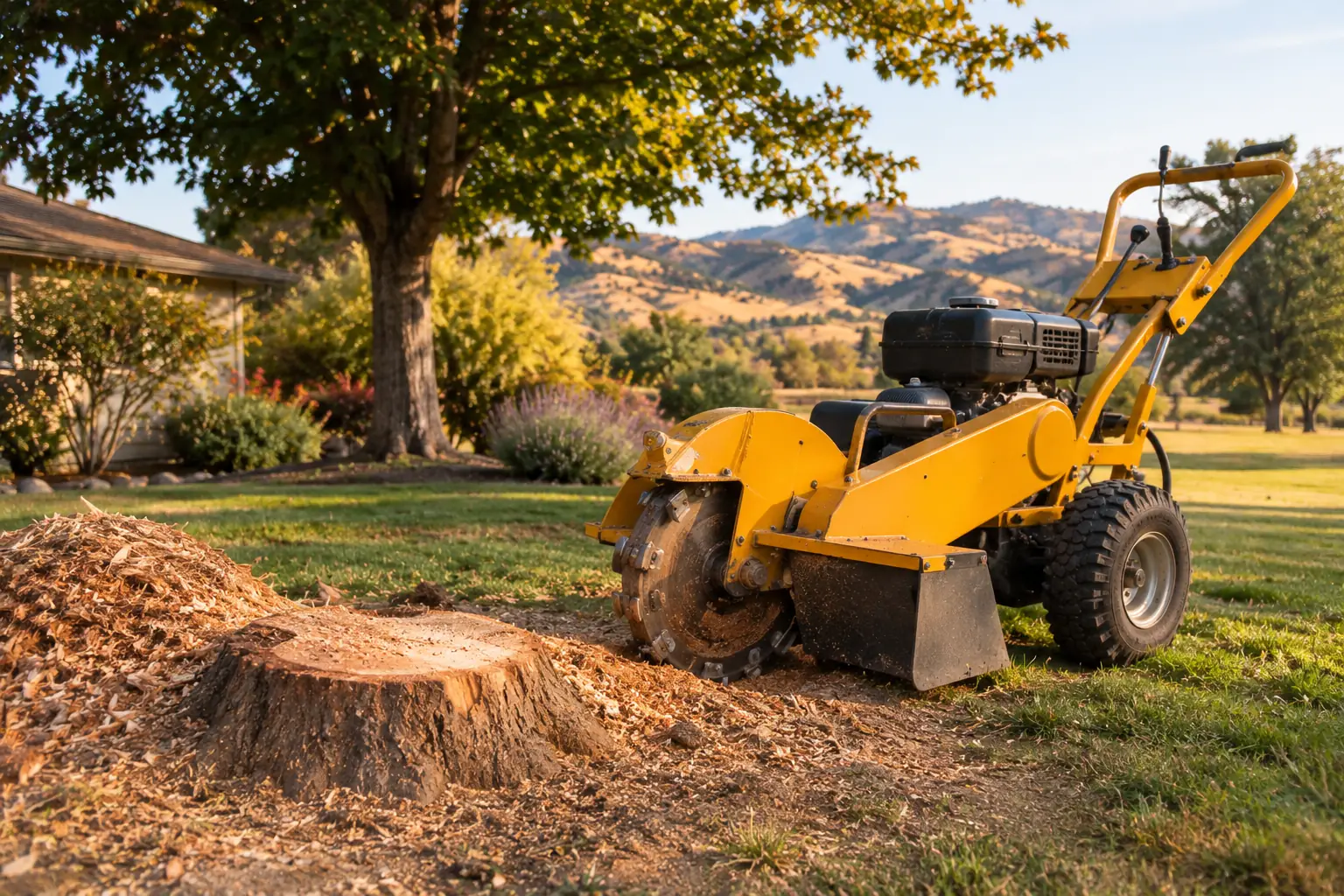
Stump grinding in Medford uses a machine with a spinning toothed wheel to chew a stump into chips, down below the soil, so the spot can be mowed, planted or covered. A typical yard stump is done in a single visit. Call (541) 855-3179 to be put through to an independent local tree service that can measure the stump and give you a written price.
Tree Services Medford is a referral service, not a grinding company. It owns no grinder and does no work in your yard. The company you reach holds an active Oregon CCB license and sets its own price. This page explains the machines, what to measure before you call, how buried utilities are handled, and the Medford rule for stumps left by street trees. You can see the full list of services from the home page.
Leave it, grind it, or dig it out
You have three choices with an old stump, and each fits a different plan for the yard.
| Option | What it involves | Fits best when |
|---|---|---|
| Leave the stump | Nothing, or cut it flush with a saw | It sits in a back corner and will not be mowed around |
| Grind it | A grinder cuts it to below ground and leaves chips | You want lawn, a bed or a path over the spot |
| Dig it out | An excavator or crew pulls the stump and main roots | You will build, pour concrete or trench right there |
Many people leave a stump until it becomes a trip hazard or blocks a mower. A stump left from a tree that died of root disease is a different case. Ask the company whether the cause of death means more of the root system should come out.
How a stump grinder works
A stump grinder has a heavy cutting wheel with carbide teeth. The operator lowers the spinning wheel onto the edge of the stump and sweeps it side to side, taking off a little wood with each pass, then moves forward and down until the stump is gone below the surface.
Grinders come in a few sizes, and the size decides what can reach your stump:
- Walk-behind grinders are small enough for many gates and backyards. They work well on small and medium stumps but take longer on big ones.
- Towable and self-propelled machines have more power for large stumps, but they need more room and firmer ground.
- Tracked grinders spread their weight, which helps on lawns, slopes and soft soil.
Tell the company about tight gates, steps, retaining walls or a septic field between the street and the stump. Those details decide which machine can do the job without damage to the yard.
How to measure a stump before you call
Grinding is often priced by the stump's width, so a measurement helps the company give a closer number over the phone. It takes a tape measure and a few minutes.
- Measure straight across the widest part of the cut top, in inches.
- If the stump flares out at ground level, measure across the flare too.
- Note the height of the stump above the soil.
- Count every stump you want ground, including small ones.
- Note surface roots that run out across the lawn, and how far.
- Take a photo of each stump with something for scale, such as a shoe.
A phone estimate built on your numbers is still only a starting point. The company's written estimate, made after it has seen the stump, is the price to rely on.
Buried utilities come first
Grinding cuts into the soil, so underground lines need to be marked before the wheel goes down. Oregon's one-call center takes requests at 811 or 1-800-332-2344, or online at Oregon811.com, and asks for at least two full business days but no more than ten before the dig (Oregon Utility Notification Center FAQ).
The center's homeowner exemption is narrow. It covers only an owner or tenant digging on their own private property, less than 12 inches deep, and outside any easement. A contractor grinding a stump does not fit those terms, so ask the company to confirm it has requested locates and will wait for the paint and flags.
Public locates usually stop at the meter or at the connection to your private service. Sprinkler pipes, landscape lighting and buried lines to a shop or pump are private. Show the company where you know they run.
Stumps from Medford street trees
If the tree stood in the public right of way, Medford's rules set the depth. The city's street tree permit application says a permitted removal requires grinding the stump to six inches below grade and replanting an approved street tree, at least 1 3/4 inches in caliper (City of Medford street tree permit application). The application cites Medford Municipal Code 6.725 for the replacement rule.
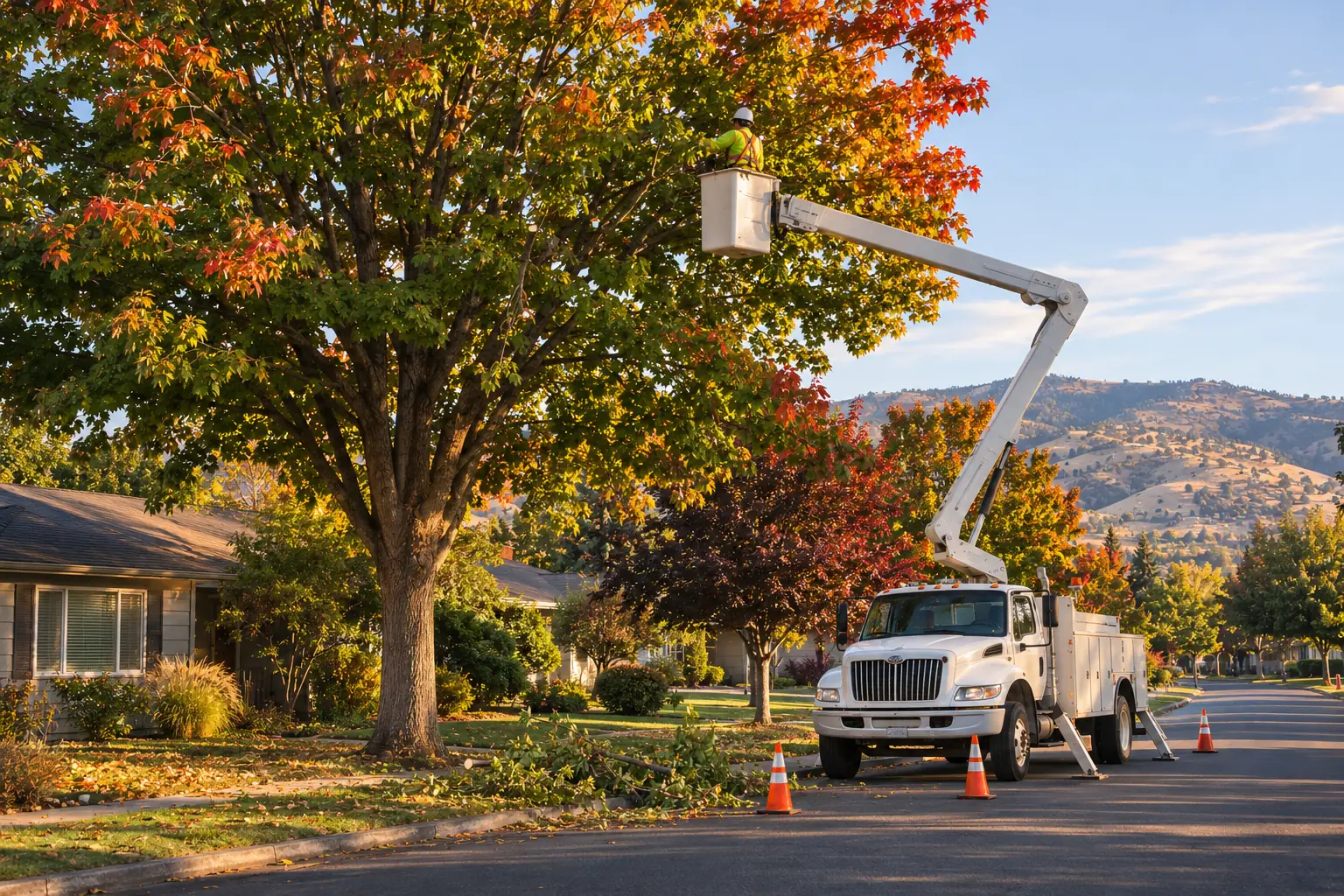
The replacement tree has to fit the spot, so the form asks for the planting strip width and whether there is irrigation in it. The City Arborist can be reached at 541-774-2652, and the Medford tree rules guide covers the street tree program in more depth.
What stump grinding costs
Fixr's national figures put a typical stump grinding job at $150 to $300, with an average of about $200 (Fixr, stump grinding cost, updated January 31, 2025). Its other numbers help you read a quote:
- Many companies price at about $2 to $5 per inch of diameter.
- Many have a minimum charge of about $100 to cover travel and setup.
- The first stump may cost $80 to $150, and each extra stump on the same visit $40 to $75.
- Cleanup can be billed separately, at about $2 to $3 per inch.
A stump added to a tree removal often costs less than a separate visit, since the crew is already on site. Fixr puts stump grinding added to a removal at $100 to $500 per stump (Fixr, tree removal cost, updated January 31, 2025). Ask about it when you book a tree removal. The tree service cost guide covers other ways to keep the bill down.
Chips, settling and what to plant
After grinding, the hole is full of wood chips mixed with soil, usually in a mound that settles over the following months. The company may leave the chips, spread them, or haul them away, so ask which.
Plan the next step for the spot:
- Lawn. Most of the chips need to come out, and fresh topsoil goes in, mounded a little to allow for settling.
- Garden bed. Rake out the chips and add soil and compost. Chips can be reused as mulch on paths and around shrubs.
- A new tree. Planting a few feet to one side of the old stump avoids the decaying roots. For a street tree, the city sets the species list.
- Paving or building. Grinding may not remove enough wood. Ask whether full stump removal is the better choice.
Roots left in the soil rot slowly. Some trees can sprout from roots or the stump edge after grinding. If shoots appear, cut them back and tell the company.
Questions for the company
These questions cover the points that cause most stump grinding disputes:
- How deep will you grind, and how far out past the stump edge?
- Will you grind the surface roots I pointed out?
- Who requests the 811 locates, and will you wait for the marks?
- What machine will you bring, and will it fit through my gate?
- Will you protect the lawn, windows and cars from flying chips?
- What happens to the chips, and is cleanup in the price?
- What is your CCB number, so I can check it on the CCB license search?
Frequently asked questions
How deep does a stump get ground?
It depends on the plan for the spot and on what is in the ground, such as rocks or pipes. For stumps left by Medford street trees, the city requires grinding six inches below grade. Tell the company your plan so it can grind to suit.
Can a grinder reach a stump in a fenced backyard?
Often, yes. Small walk-behind grinders are built for narrow gates. Measure the gate width and tell the company, along with any steps or slopes on the way in.
Will grinding kill the roots?
Grinding removes the stump, but most roots stay in the soil and decay over time. Some species send up sprouts afterward. Ask the company what to expect from your tree.
Is it cheaper to grind several stumps at once?
Usually. Many companies charge a minimum fee per visit, and Fixr's figures show added stumps priced lower than the first. Grouping stumps into one visit spreads the setup cost.
Is stump grinding safe near my house or fence?
A careful operator can grind close to structures, but the wheel throws chips and needs clearance. Point out windows, siding, fences and cars nearby, and ask how the company will shield them.