
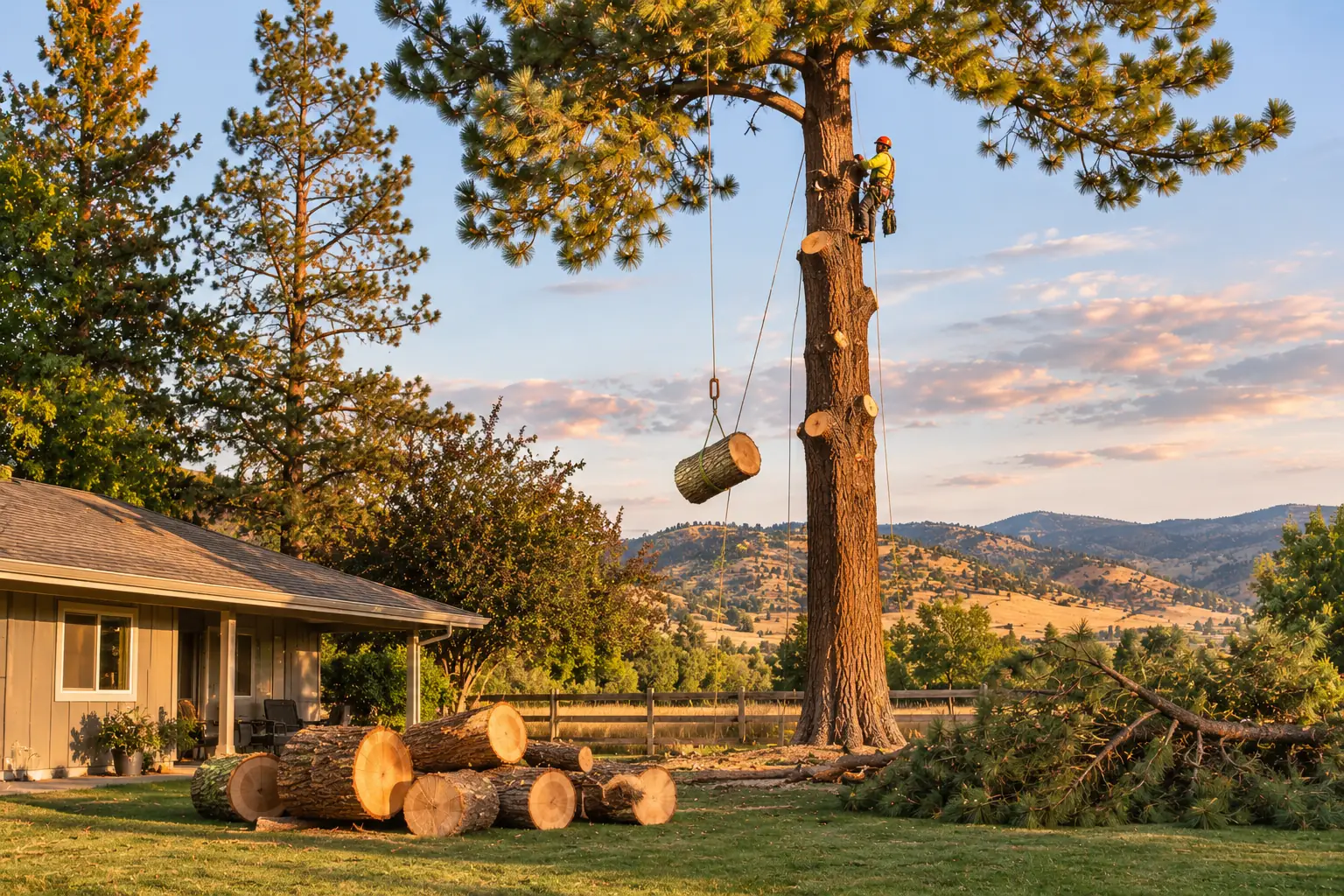
Anyone arranging tree service in Jacksonville can start with a free call to (541) 855-3179, which goes through to one independent company with an active Oregon CCB license. Ask at the start whether it takes work in Jacksonville. If it does, it will want to see the pruning, removal or health problem before pricing it. Ask whether that visit costs anything, and ask for the quote in writing. Jacksonville's development code shapes some of that work, so the rules below are worth a read first.
Few towns in the valley have as many big trees per block. The city's own code puts Jacksonville's canopy at about 64 percent, against a national average near 30 percent, and the Jacksonville Historic District has been a National Historic Landmark since 1966. Old trees next to old buildings make pruning and care the main work here, with removal as the less common job.
Pruning is normal care. Topping is treated like removal.
In Jacksonville, regular pruning needs no permit, while topping a large live tree falls under the same rules as cutting it down.
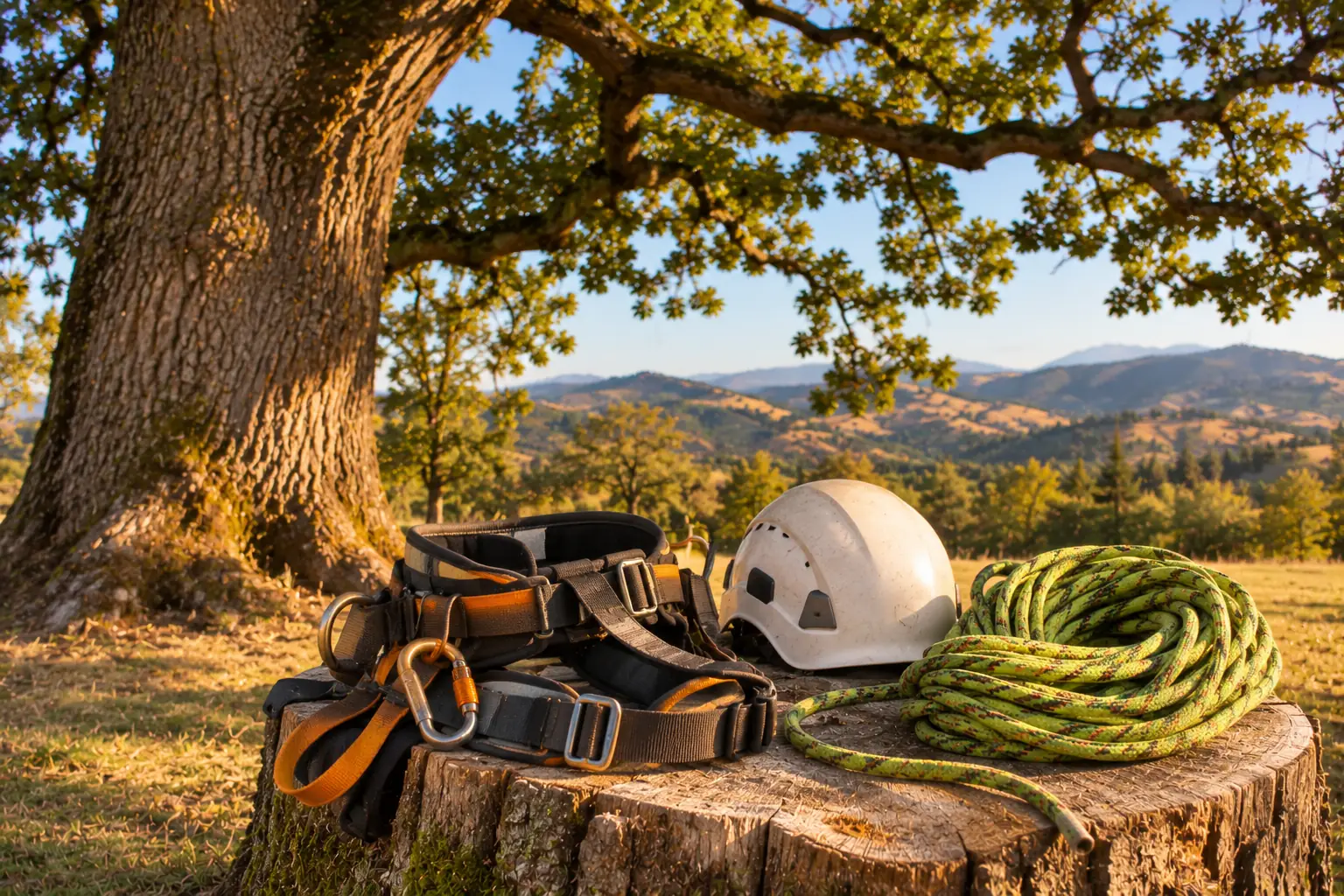
Section 18.18.020 of the Jacksonville Development Code covers live "resource trees," meaning trees at least 12 inches across at 4 feet above the ground. It states that its rules also apply to topping any live resource tree. In practice, a crew that offers to "take the top out" of a big oak or pine in Jacksonville is offering a job that may need city approval, a removal reason and a replacement tree.
Good pruning avoids the issue anyway. Topping leaves large stubs that tend to sprout weak shoots and decay. A tree service can usually lower a tree's height or weight with reduction cuts back to a lateral branch, or thin it so wind passes through. Ask for that by name, and read more on our tree trimming page.
Before any work on a large Jacksonville tree
A few minutes of checking saves a stop-work call later. This order works for most jobs:
- Measure the trunk. Wrap a tape around it at 4 feet up and divide by 3.14. If the result is 12 inches or more, the resource tree rules may apply.
- Find your zone. Downtown and commercial districts (the code names the Historic Core, General Commercial and Artisan zones), plus riparian and wetland lots, need a permit with public notice for a removal. On an ordinary residential lot, the Planning Director can sign off through an administrative review. Lots zoned Hillside Residential or Special Protection are handled under a separate section, 18.20.080(E).
- Decide what the job really is. Pruning, thinning and deadwood removal are care. Topping, or cutting enough to kill the tree, is not.
- Ask whether an arborist's opinion is needed. The code lets the city ask for one with an application.
- Phone the Planning Department, 541-899-6873, and give your address.
If the tree could collapse at any moment and threatens people or property, the code lets the Planning Director issue the permit free, though the city may ask you to pay for an arborist's opinion. For that kind of tree, see the emergency tree service page.
Protecting old roots during a remodel
Many Jacksonville tree problems start with digging, not with the tree. The code's special tree protection standards spell out how close construction may come.
Under section 18.18.030(B), for a tree singled out for protection, the ground within 4 feet of the trunk must not be cut, filled, compacted or paved. In the rest of the area under the branches, no more than 12 inches of fill or cut is allowed, and digging that would damage the root system is not allowed at all. When there is doubt, the applicant may have to show the city arborist that the trees will be protected.
Those rules are written for protected trees on development sites, but they describe good practice for any old tree. Before a new patio, driveway, trench or addition, ask a tree service to mark the root zone and suggest fencing. Our tree care and health checks page covers what a crew looks for when a tree starts to thin after construction.
Street trees and overhead wires
Jacksonville's street tree standards try to keep tall trees out from under power lines in the first place.
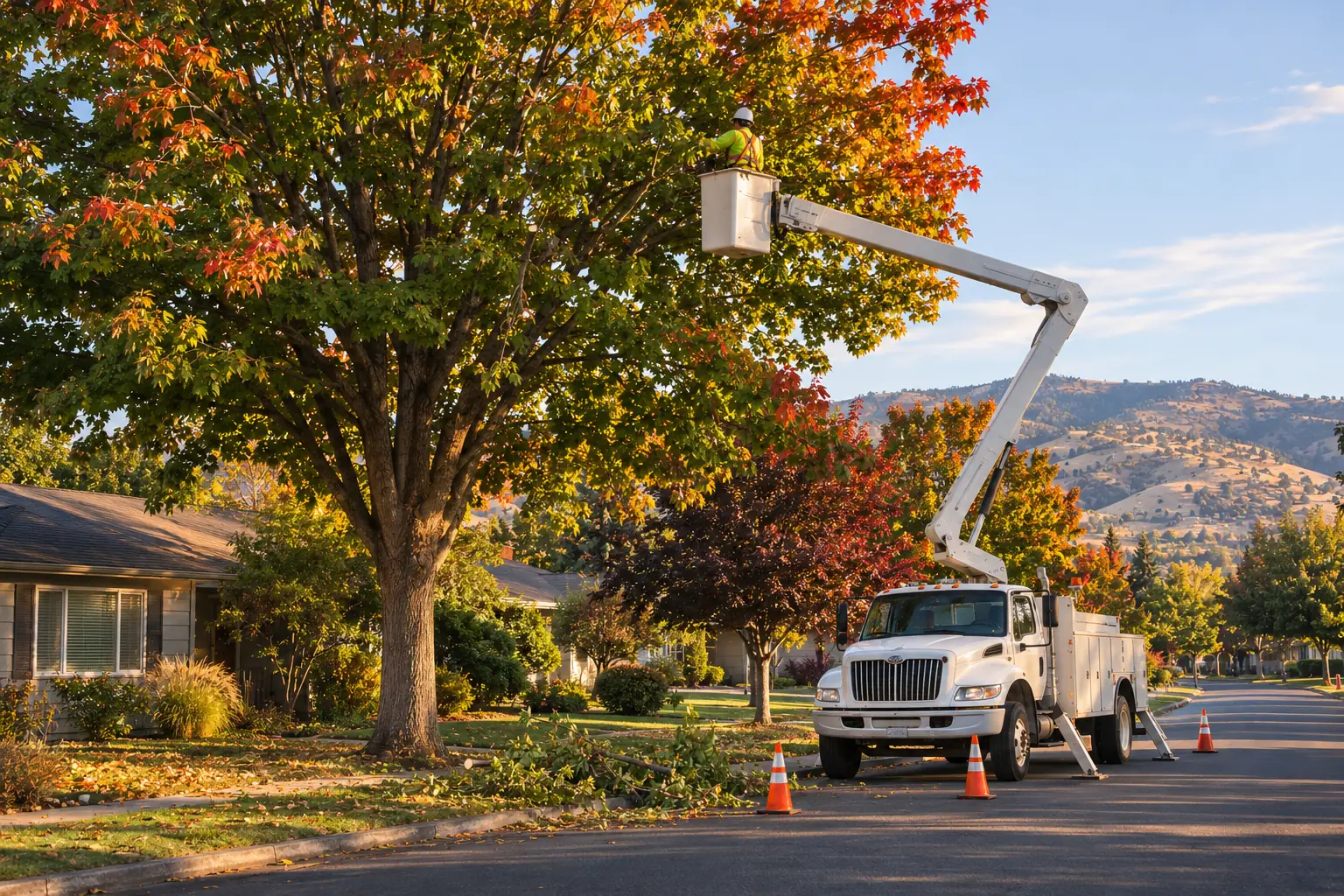
Section 18.18.030(C) says that where overhead electric lines sit directly above a planting area, only trees listed as "small" on the city's street tree list may go in, unless there is at least 10 feet of horizontal clearance from the lines. Medium trees need that 10 feet and large trees need 20. Trees at street corners must branch no lower than 8 feet so drivers can see, and protection devices stay on young trees until they reach 4 inches in diameter or two years in the ground, whichever is longer. Metal stakes are not allowed.
When an existing tree has grown up toward the wires, the pruning belongs to the utility first, and Pacific Power takes those requests at 1-888-221-7070. A limb that has broken onto a line or is resting on one is an emergency instead: stay 35 feet back, call 911, then Pacific Power's downed-wire line at 1-877-508-5088. A private tree service can work near the wires only after the utility says it is safe.
Weather and timing in the hills
Jacksonville sits at about 1,569 feet at the foot of Miller Mountain, where summers are hot and dry and winters bring most of the rain, according to the town's climate summary. July and August are the driest months and December the wettest.
That pattern shapes the calendar. Many deciduous trees are easier to read and prune in late winter, when the leaves are off. Summer work on wooded hillside lots may run into fire season limits on saws, so ask the company how it handles those days. The pruning calendar lists timing by species.
No burning inside city limits
Jacksonville residents cannot burn yard debris at home, so plan for the branches before the work starts.
Jackson County's open burning page says burning is prohibited within the city limits of Medford, Jacksonville, Phoenix and Talent. Ask whether the estimate includes chipping and hauling, or whether you want the chips left for mulch. Firewood rounds stacked on the lot are another option for oak and madrone.
Nearby pages
Expect a Jacksonville job to cost more when it needs a permit, an arborist's letter or careful rigging over a historic roof, and treat the written estimate as the real price. The tree service cost guide has ranges with sources, and the guide to choosing a tree service covers CCB checks and insurance. For the town next door, see tree service in Central Point. The home page lists everything else.
Frequently asked questions
Is a permit needed to prune a tree in Jacksonville?
Regular pruning is not removal and does not need a tree removal permit. Topping a live tree that measures at least 12 inches across at 4 feet up does fall under the tree removal standards in section 18.18.020, so ask the Planning Department first.
How do I tell if my tree is a resource tree?
Measure around the trunk 4 feet above the ground and divide by 3.14. If the live tree is 12 inches or wider at that height, the code calls it a resource tree.
Can I plant a big shade tree under the power lines in front of my Jacksonville house?
Not in the street planting area. Where overhead lines sit directly above it, the code allows only trees listed as small unless there is at least 10 feet of horizontal clearance from the lines.
Can I burn my pruning debris in Jacksonville?
No. Jackson County lists Jacksonville among the cities where open burning is prohibited inside city limits, so chipping or hauling is the usual answer.